 Marketing Team
Introduction
Hiring is a two-way street. Candidates want to feel respected, and employers want to make informed decisions without crossing personal boundaries. In today’s digital world, where personal data is more visible than ever, it’s natural for people to pause and ask questions about how their information is used during hiring.
These conversations matter because privacy concerns in background checks often arise from uncertainty rather than misuse. When employers clearly explain what is being reviewed and why, and treat candidate privacy as a priority, the process becomes a confidence-building step instead of a source of discomfort.
Why Privacy Concerns in Background Checks Exist
Privacy concerns in background checks usually arise when candidates are unsure about what happens behind the scenes of the hiring process. A lack of visibility can make even standard screening steps feel intrusive, especially when personal information is involved.
Common concerns often include:
- What information is being collected?
- Why are specific checks required for a role?
- How will personal data be stored, shared, and protected?
These uncertainties are often amplified by inconsistent hiring practices, outdated assumptions, or experiences shared online. When candidates are not informed about the scope or purpose of background checks, privacy concerns can grow, even when employers are following ethical and legal guidelines.
Without clear communication, background checks may appear broader or more invasive than they actually are. Transparency plays a critical role in addressing this gap by helping candidates understand that privacy considerations for background checks limit screening to job-relevant information within defined legal boundaries.
Common Myths About Background Checks and Privacy
Several myths continue to fuel privacy concerns in background checks, even though they rarely reflect how modern background checks actually work. These misunderstandings often create unnecessary anxiety for candidates and confusion for employers.
Employers Can See Everything About Your Personal Life: One of the most common fears is that background checks give employers unrestricted access to a candidate’s private life. In reality, screening is limited to job-relevant information such as identity verification, employment history check, or education credentials. Personal habits, social activities, and opinions are not part of standard background checks, as they have no bearing on professional suitability.
Background Checks Are Conducted Without Consent: Another widespread misconception is that employers can initiate background checks without informing candidates. In most regions, candidate consent is a legal requirement before any checks begin. Responsible practices require employers to clearly explain the scope of the process and obtain authorisation, ensuring transparency and fairness throughout.
All Background Checks Are the Same: Many people assume that background checks follow a single, universal format. In practice, screening varies depending on the role, industry, and regulatory environment. A senior financial role may require more thorough checks than an entry-level position, while remaining within legal and privacy boundaries. This role-based approach helps balance due diligence with respect for privacy.
By separating employee background screening myths from reality, both candidates and employers can better understand how background checks work and why privacy protections are built into the process. Clearing these misconceptions helps reduce privacy concerns in background checks and improves candidate trust.
What Employers Actually Review in Background Checks
Understanding what employers genuinely review during background screening can go a long way in easing privacy concerns. Although the term “background check” may sound expensive, most screening processes are carefully defined and limited to verifying information that directly relates to a candidate’s professional qualifications.
In most hiring situations, background checks typically include:
Identity Verification: This confirms that a candidate is who they claim to be, helping prevent identity fraud and ensuring records are accurately matched, without exposing unnecessary personal information.
Employment History Verification: Employers verify previous job roles, titles, and dates of employment to confirm the accuracy of a candidate’s work history. This process does not assess personal behaviour outside the workplace.
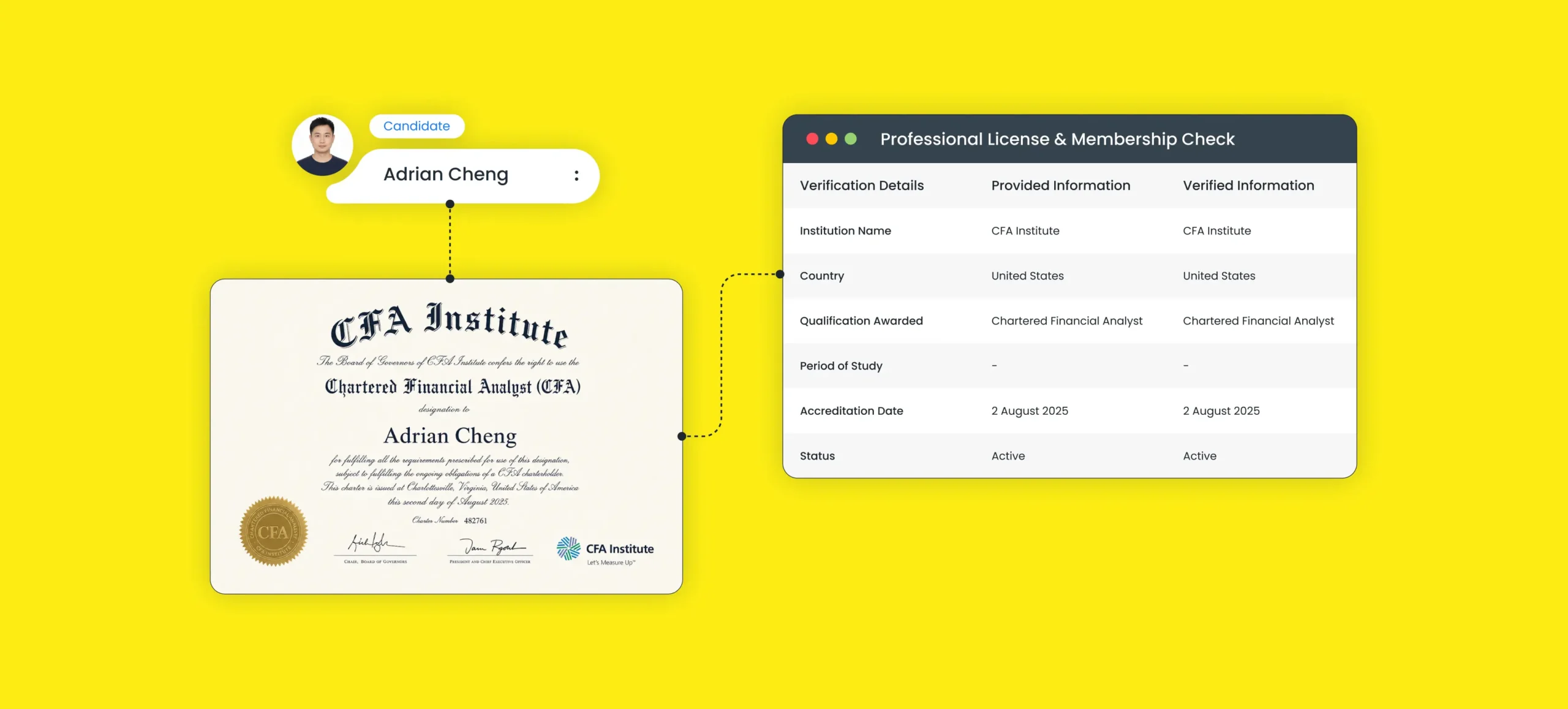
Education and Qualification Checks: Academic degrees and professional certifications are verified to ensure they are relevant to the role and truthfully represented.
Criminal Record Checks (Where Legally Permitted): When allowed by law, criminal checks are conducted within strict legal boundaries and are often limited by role relevance or defined lookback periods.
Role-Specific Background Checks: Depending on the position, additional checks, such as credit checks, bankruptcy checks, financial regulatory checks, etc., may be carried out. These checks are only used when they are directly connected to job responsibilities or legal requirements.
Overall, background checks are conducted to confirm professional credentials and assess job suitability, not to scrutinise personal lifestyles or unrelated aspects of a candidate’s life. When employers apply privacy-conscious screening practices, the process remains focused, compliant, and respectful of individual privacy.iring.
Privacy Concerns in Background Checks for Candidates
For candidates, privacy concerns in background checks often revolve around control, transparency, and fairness. Job seekers want reassurance that:
- Only relevant information is reviewed
- Personal data is handled securely
- Errors can be corrected if identified
Beyond this, candidates also value clear communication about the purpose and scope of screening. Knowing why a particular check is required and how the information will be used helps reduce anxiety and sets realistic expectations.
When candidates are informed about what is being checked, how long it will take, and what rights they have, background checks feel far more balanced and respectful. This transparency helps transform the process from a point of concern into a standard, trust-building step in hiring, making the process more transparent and reducing privacy concerns in background checks.
How Candidate’s Privacy Can Be Protected During the Background Screening Process
Background screening involves handling sensitive personal information, including identity details, employment history, education records, and, in some cases, criminal or financial data. Because privacy laws differ across regions, such as PDPO in Hong Kong, the GDPR in Europe, and other local data protection frameworks, screening processes are designed to adapt to applicable legal requirements while maintaining consistent privacy standards.
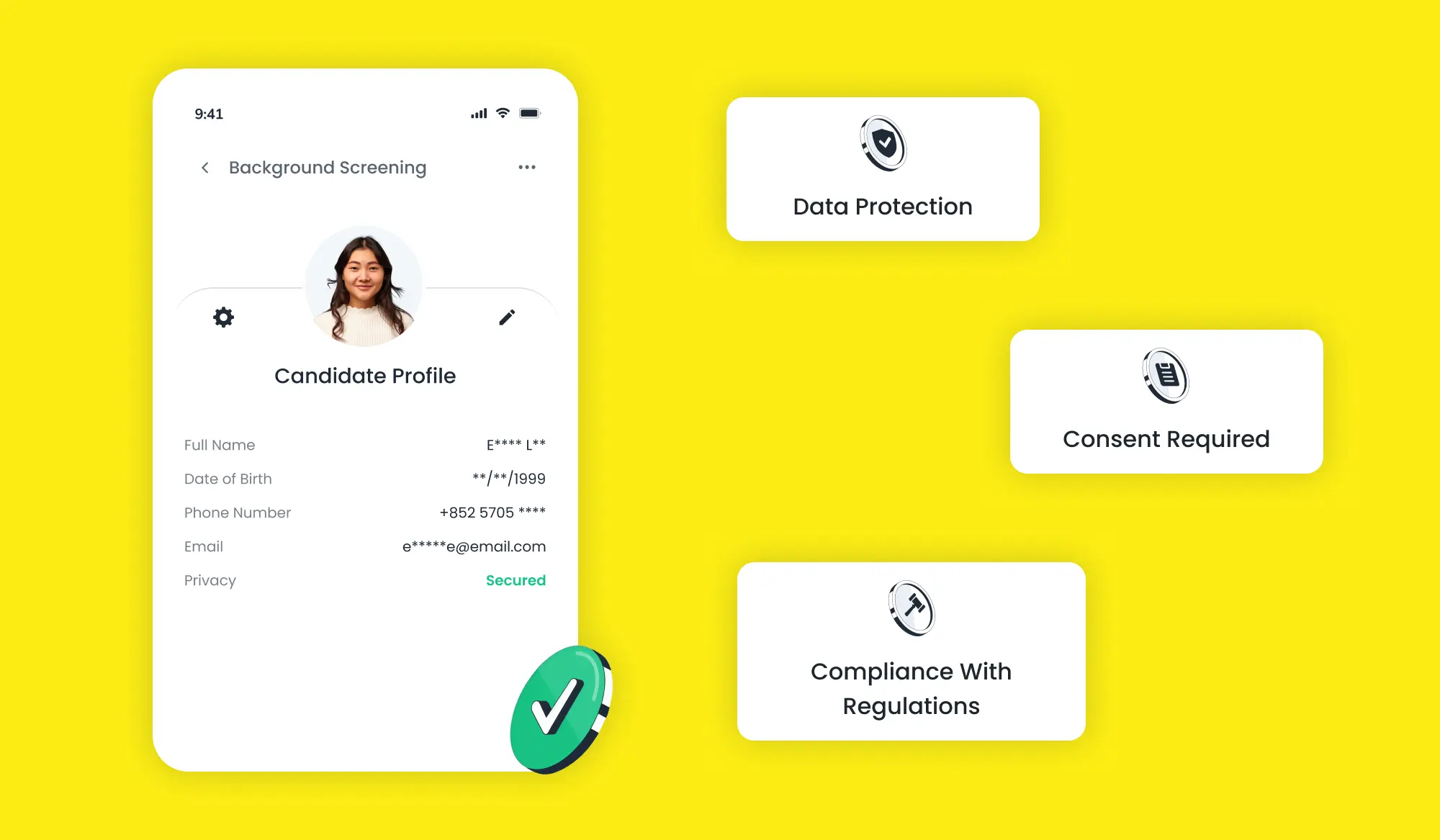
Screening Begins Only With Informed Candidate Consent: Background checks cannot legally or ethically begin without a candidate’s permission. Before any screening starts, candidates are informed about what information will be reviewed, why it is required, and how it will be used. This consent is formally documented, ensuring transparency and giving candidates control over their personal data from the very beginning.
Role-Relevant and Lawful Data Collection: Responsible background screening follows the principle of data minimisation. Only information that is directly relevant to the role and permitted by law is collected. For example, a credit check may be relevant for a finance role but inappropriate for a general position. This approach reduces privacy risks and prevents unnecessary or excessive data collection.
Secure Systems and Encrypted Data Handling: Candidate data is protected using secure technical safeguards throughout the screening process. Information is stored and transmitted through encrypted systems to prevent unauthorised access. Security measures such as controlled servers, monitoring systems, and periodic audits help ensure that sensitive data remains protected at all times.
Restricted Access and Internal Accountability: Access to background screening information is limited to authorised personnel involved in the hiring decision. Role-based access controls ensure individuals can only view data necessary for their responsibilities. Access is logged and monitored, creating accountability and reducing the risk of internal misuse or accidental exposure.
Compliance With Local and International Privacy Regulations: Background screening processes are aligned with applicable data protection and employment laws, which vary by region. This includes compliance with regulations, for instance, the PDPO in Hong Kong and other local privacy frameworks. These laws define what information can be collected, how it may be processed, and what rights candidates have over their data.
Controlled and Confidential Reporting to Employers: Employers receive structured screening reports rather than unrestricted personal data. Information is presented factually and objectively, focusing on employment relevance. Sensitive details are disclosed only when legally permitted, ensuring employers can make informed decisions without unnecessary exposure to personal information.
Defined Data Retention and Secure Disposal: Candidate data is retained only for a specific, lawful period as defined by legal requirements and internal policies. Once this period ends, information is securely deleted or anonymised. Clear data disposal practices help prevent long-term privacy risks and unauthorised reuse of personal information.
Transparency and Candidate Rights: Candidates have the right to understand how their data is used throughout the screening process. They may request access to their information, correct inaccuracies, or raise concerns if something appears incorrect. Open communication and defined dispute processes help maintain trust and fairness in hiring decisions.
Conclusion
Privacy concerns in background checks don’t exist because screening is inherently invasive. They exist when communication is unclear or expectations are misaligned. When conducted responsibly, background checks respect individual privacy while supporting fair and informed hiring decisions.
By understanding the realities of screening and the importance of privacy considerations for background checks, both candidates and employers can move forward with trust and clarity.
Looking for A Compliant Screening Partner?
Choose compliance background screening that aligns with regulatory and privacy expectations.