 Marketing Team

Introduction
Choosing the right employment background screening company in Hong Kong is a critical decision for employers seeking to reduce hiring risk and protect organizational integrity.
An employer is seeking to fill a role that needs to be filled quickly. The candidate looks promising, interviews go smoothly, the start date is confirmed, and there’s pressure to move ahead without delays. In fast-moving hiring markets like Hong Kong, working with a reliable employee background check company ensures that speed does not compromise accuracy or compliance. To keep things moving, background screening is rushed, handled internally, or limited to surface-level verification.
Weeks after onboarding, gaps begin to surface. Certain employment details are unclear. Inconsistencies appear between what was declared and what actually exists. Compliance expectations that seemed minor during hiring suddenly matter more than expected.
This situation is more common than many employers realise, particularly in regions like Hong Kong, where hiring timelines are tight, and compliance expectations are strict. When background screening is treated as a checklist task rather than a structured, independent process, risk does not disappear. It simply shifts downstream, where it is harder and more expensive to manage.
A reliable employment background screening company in Hong Kong brings structure, consistency, and depth to the process. It helps employers identify red flags early, verify critical information accurately, and make hiring decisions with confidence before access is granted, not after issues arise.
The Two Common Approaches to Background Screening
Employers generally follow one of two approaches when conducting background screening: handling the process in-house or engaging an employment background screening company in Hong Kong. Each method has its benefits and challenges, and understanding these helps ensure accurate, compliant, and efficient hiring.
In-House Background Screening
Managing background screening internally can appear practical at first, particularly for organisations with low hiring volumes or immediate turnaround needs. Employers retain direct oversight of the process and can prioritise screening they believe is most relevant to specific roles.
Common advantages include:
Direct Control: HR teams decide which checks are conducted and how results are reviewed, allowing alignment with internal policies and role-specific expectations.
Short-term Speed: When handled informally or at a basic level, internal checks can move quickly, especially for urgent hires or limited screening scopes.
Internal Data Handling: Candidate information remains within the organisation, offering a sense of control over data access and storage.
However, these benefits tend to be situational and short-lived, especially as hiring scales or compliance expectations increase.
The Hidden Risks of In-House Screening
While internal background screening may initially seem manageable, it often introduces risks that become visible only later.
Key limitations include:
High Operational Burden: Thorough screening is manual, time-consuming, and resource-heavy. HR teams must chase references, validate documents, and interpret findings, often at the expense of strategic HR responsibilities.
Limited Verification Depth: Internal teams typically lack access to authoritative databases, local registries, and cross-border verification channels. This limits the ability to confirm employment, education, criminal, or financial records with confidence.
Compliance Exposure: Employment laws, consent requirements, and data privacy regulations vary across regions and change frequently. Without dedicated expertise, internal screening increases the risk of procedural errors, non-compliance, and regulatory exposure.
Inconsistent Outcomes: Without standardised methodologies, screening quality can vary by role, recruiter, or urgency. Missed discrepancies or incomplete checks can directly impact hiring quality, workplace trust, and organisational safety.
Why Employers Use an Employment Background Screening Company
For organisations prioritising accuracy, compliance, and consistency, outsourcing to an employment background screening company provides a more reliable foundation.
Company-led screening introduces structure, specialised expertise, and access to verification tools that are difficult to replicate internally. This approach is particularly critical for regulated industries, high-volume hiring, or cross-border recruitment.
Why outsourcing Background Screening is the Stronger Choice
Outsourcing background screening through an employment background screening company gives employers a structured, scalable, and compliant approach. A professional background screening provider ensures consistent, reliable results as hiring needs expand.
Specialised Expertise: Professional screening providers focus exclusively on background verification. Their teams follow standardised, legally compliant processes and understand regional requirements, reducing errors and inconsistencies.
Customisable Screening Plans: Outsourced screening is not one size fits all. Screening programmes can be tailored based on role sensitivity, seniority, regulatory exposure, and geographic risk. Employers can apply different levels of checks while maintaining consistency and compliance across the organisation.
AI-Supported Screening with Human Expertise: Outsourcing combines technology with human judgment. AI-driven tools help identify discrepancies, flag risk indicators, and accelerate processing, while experienced verification specialists validate results, assess context, and manage complex cases. This balance improves accuracy without relying solely on automation.
Comprehensive Verification Coverage: Outsourcing provides access to employment, education, criminal, and financial regulatory checks across multiple jurisdictions. Global databases and local verification channels enable cross-border screening that internal teams may not be equipped to handle.
Operational Efficiency: By outsourcing background checks, HR teams reduce administrative workload. This allows internal teams to focus on hiring decisions, candidate experience, and onboarding.
Built-in Risk Mitigation: Outsourced screening follows defined compliance frameworks, documentation standards, and audit trails. This reduces regulatory, financial, and reputational risks associated with hiring.
Consistency At Scale: Outsourcing ensures that every candidate is screened using the same criteria and depth, regardless of hiring volume, urgency, or location.
Key Considerations in Outsourced Background Screening (and Why They Are Manageable)
Outsourcing does require investment and trust, but these considerations are typically outweighed by the reduction in long-term risk.
Predictable, Flexible Costs: Many providers offer pay-as-you-go models and customisable packages, so employers pay only for the checks they need while keeping costs measurable and controlled.
Employer-Led Control: Hiring teams retain oversight through clear SLAs, reporting frameworks, and defined escalation processes.
Stronger Data Security: Outsourced screening typically follows formal data protection standards that are often more robust than internal handling.
Clear Turnaround Expectations: Timelines are transparent, with most delays linked to external authorities rather than the screening provider itself.
When properly selected and managed, a professional background screening company does not reduce control. It replaces uncertainty with structure.
Internal background checks may offer convenience in limited scenarios, but they struggle to scale, remain compliant, or deliver consistent accuracy. Outsourcing background screening provides depth, reliability, and risk protection that modern hiring environments increasingly demand.
What Employers Should Evaluate Before Choosing an Employment Background Screening Company
Choosing the right employment background screening company is critical for ensuring accurate, compliant, and timely candidate screening. Employers must evaluate several key factors beyond price or speed, including the company’s expertise, flexibility, legal compliance, and ability to adapt to the organization’s hiring needs. Making an informed choice helps protect the company from risk while supporting a smooth hiring process.
Customisation of Screening Packages
Different roles carry different responsibilities and risks, so a single standard check may not be sufficient for every position. Companies that provide tailored screening can adjust the depth, focus, and type of verification depending on the seniority, function, or industry of the role.
Customised checks ensure that high-risk positions receive thorough verification while avoiding unnecessary steps for lower-risk roles. This approach saves time and resources while providing employers with insights that are relevant and actionable for the position being filled.
Balancing AI and Human Expertise
Modern background screening relies on a combination of technology and human review to ensure both speed and accuracy. Automated systems can quickly gather and cross-check large volumes of data, while human experts analyze results to confirm accuracy and interpret nuanced information.
This combination reduces errors, identifies inconsistencies, and ensures that unusual or complex cases are handled correctly. By leveraging both technology and human expertise, employers can trust the results while maintaining efficiency in the screening process.
Accuracy and Consistency in Screening Results
Accuracy is essential for fair and informed hiring decisions. Employers should look for screening partners that apply consistent verification standards across all candidates and roles, supported by direct access to authoritative data channels.
Standardised methodologies, combined with verified data sources and official record access, reduce variability and minimise the risk of missed or incorrect information. This ensures every candidate is assessed using the same depth and criteria, based on reliable records rather than assumptions or incomplete inputs.
Transparency in Screening Processes and Reporting
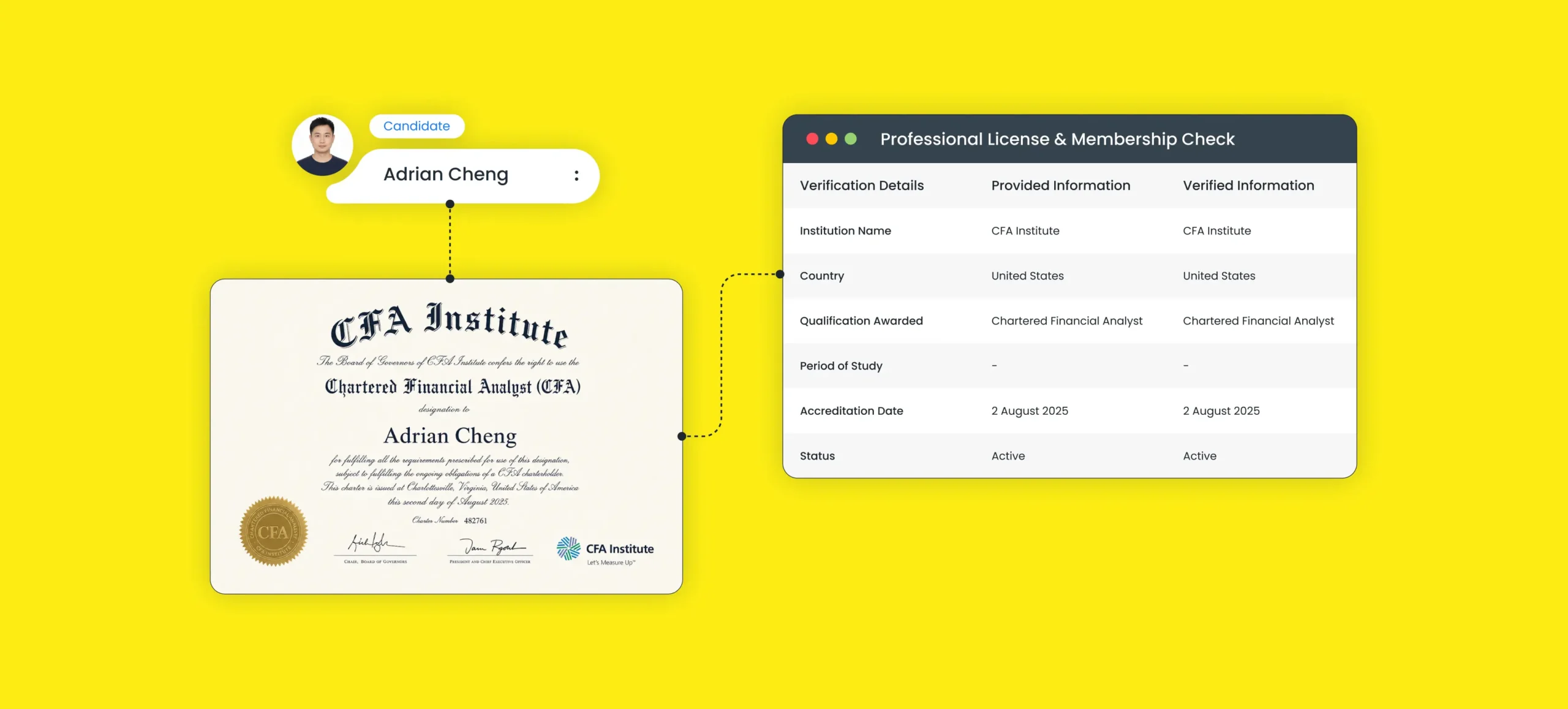
Beyond accurate results, employers also need visibility into how background screening is conducted. Transparent screening processes allow HR teams to understand what was verified, how it was verified, and the sources used.
Clear, structured reports should present findings objectively, explain any discrepancies, and outline verification limitations where applicable. This level of transparency supports confident decision-making, reduces misinterpretation, and enables employers to apply screening outcomes consistently across roles.
Technology, Integration, and Ease of Use
Screening platforms should support efficient hiring workflows. A modern system should offer secure, user-friendly platforms with real-time status tracking to help HR teams manage verifications efficiently.
Integration with HR systems or applicant tracking systems (ATS) reduces manual effort, improves data accuracy, and streamlines hiring operations. Ease of use is equally important, ensuring HR teams can manage screening without unnecessary complexity.
Communication and Local Support for Employers and Candidates
Timely and clear communication is essential for smooth background screening. Companies should offer responsive support to both HR teams and candidates, addressing queries and providing guidance throughout the verification process.
Local knowledge is particularly valuable in Hong Kong, where employers must align with requirements such as the Personal Data (Privacy) Ordinance (PDPO) and role-specific verification frameworks.
Compliance with Local and International Laws
An employee background check company involves handling sensitive personal data, and compliance with legal requirements is critical. Companies must understand local labor laws, data protection regulations, and international rules such as GDPR.
It ensures candidate consent is obtained, personal information is securely handled, and cross-border checks are conducted lawfully. By choosing a compliant company, employers protect themselves from legal exposure while conducting ethical and transparent hiring.
How the Right Employment Background Screening Company Supports Long-Term Hiring Success
Choosing the right employment background screening company goes beyond simply completing screenings; it directly impacts trust, compliance, and long-term organizational growth. A reliable partner ensures accurate results, follows legal requirements, and provides scalable solutions that grow with your hiring needs, helping employers make informed decisions and strengthen confidence in the hiring process.
On the other hand, partnering with an unreliable or non-compliant company can lead to inaccurate reports, regulatory penalties, wasted resources, and reputational damage. By carefully evaluating factors such as customisation, technology, transparency, communication, and compliance, employers can select a trusted employee background check company that supports safer, more efficient, and sustainable hiring over the long term.
Make Background Screening a Strategic Advantage
Contact us to develop a screening approach that ensures accuracy, compliance, and confidence in every hire.