Zooby Siddiqui
Introduction
In today’s risk-aware hiring environment, background verification plays a key role in validating candidate information before onboarding. Yet even with detailed screening processes, employers may sometimes encounter inconsistencies between the details candidates provide and the information obtained from verified sources, which can result in a background check discrepancy during the verification process.
These inconsistencies are known as background check discrepancies. Identifying and understanding the most common types of mismatches helps organisations respond appropriately and maintain a fair, transparent hiring process.
What Is a Background Check Discrepancy?
A background check discrepancy occurs when information discovered during verification does not match the details provided by the candidate during the hiring process. These differences are identified when employers compare the information shared in CVs or applications with records obtained from official sources.
This mismatch may appear in various areas such as:
- Employment history
- Education credentials
- Identity documents
- Criminal records
- Address history
For Instance, if a candidate states that they worked at a company until 2023, but the employer confirms the employment ended in 2022, this difference becomes a red flag in a background check.
Why Do Discrepancies Occur in Background Checks?
There are several reasons why discrepancies may appear during background checks. Not all of them are intentional. In many cases, these differences arise from simple mistakes, outdated records, or variations in how organisations document information.
During the hiring process, candidates may provide details based on memory or personal records, while employers rely on official documentation during verification. These differences can sometimes lead to a discrepancy in background check findings when employers compare candidate information with official records.
Some common causes include:
Human Errors: Candidates may accidentally provide incorrect employment dates, job titles, or address history. These mistakes often happen when information is entered manually or recalled from memory. Even small typographical errors can create inconsistencies during verification.
Outdated Records: Sometimes, company or institutional records are not updated regularly. As a result, the information stored in official databases may differ from what a candidate believes to be correct. This can lead to discrepancies when the verification process compares both sources.
CV Simplification: Candidates occasionally simplify job roles or employment timelines on their CVs to make them easier to read. For example, they may combine multiple short roles into one or round off employment dates. While this may not be intentional, it can still lead to discrepancies during verification.
Documentation Issues: Documents that are incomplete, unclear, or incorrectly submitted can create inconsistencies in verification results. Missing details, low-quality scans, or incorrect document formats may prevent accurate confirmation of information. In such cases, additional clarification may be required.
Intentional Misrepresentation: In some cases, discrepancies arise because the candidate intentionally provides inaccurate information to improve hiring chances. This may include exaggerating job titles, extending employment periods, or claiming qualifications that cannot be verified. Such discrepancies are usually reviewed more carefully by employers.
Differences in Record Formats: Organisations may record employment details, job titles, or qualifications in different formats. For example, a job title used internally by a company may differ from the title listed on a CV. These formatting differences can sometimes appear as discrepancies during checks.
Name Variations or Identity Details: Minor variations in name spelling, use of initials, or changes after marriage can create inconsistencies in records. Identification numbers or personal details may also be recorded differently across documents. These differences can sometimes trigger a discrepancy during verification.
Types of Discrepancies Found in Different Checks
Background verification usually includes several types of checks that help employers confirm the accuracy of the information provided by a candidate. Each check focuses on a specific area of a candidate’s identity, qualifications, or professional history. When verified information does not match the details provided during the hiring process, it may indicate a discrepancy in a background check. Employment history, education credentials, and identity records are among the most common background check discrepancies identified during verification.
Below are different checks and examples of discrepancies that may appear.
Address Check
Address checks verify a candidate’s residential history and confirm whether the provided address information is accurate. A discrepancy may occur if the address details provided by the candidate do not match available records. Employers often use this check to validate identity consistency and ensure the candidate’s location history matches available records.
Discrepancies may include:
- The address cannot be located or does not exist
- The candidate never lived at the reported address
- Incorrect duration of residence
What Should Be Done?
If discrepancies are identified, employers should verify the address through official records or supporting documents such as utility bills or rental agreements. Candidates may be asked to provide proof of residence or clarify any differences in address history.
Adverse Media Check
Adverse media checks review publicly available news sources and media reports for negative information linked to the candidate. This check helps organisations identify potential reputational risks.
Discrepancies may include:
- Negative media reports linked to the candidate
- Involvement in public controversies or legal issues
- PEP (Politically Exposed Person) and Derogatory findings
What Should Be Done?
If adverse media records are identified, employers should review the credibility and relevance of the information from reliable news sources. Candidates may be asked to clarify the context of the report or provide additional information before a hiring decision is made.
Bankruptcy Check
Bankruptcy checks identify whether a candidate has been legally declared bankrupt or involved in insolvency proceedings. These checks are often conducted for roles involving financial responsibility or fiduciary duties.
Discrepancies may include:
- Undisclosed bankruptcy records
- Ongoing bankruptcy proceedings
What Should Be Done?
If bankruptcy records are identified, employers should review the details and assess whether the financial status affects the responsibilities of the role. Candidates may be asked to clarify their financial status or provide supporting legal documents.
Civil Litigation Check
Civil litigation checks identify legal disputes involving the candidate in civil courts. This helps employers understand whether the candidate has been involved in lawsuits that may pose legal or reputational risks.
Discrepancies may include:
- Confirmed litigation records not disclosed by the candidate
- Legal disputes linked to the candidate’s name
What Should Be Done?
If litigation records appear, employers should review the nature of the case and determine whether it poses legal or reputational risks. Candidates may be asked to provide additional context or documentation regarding the case.
Criminal Check
Criminal checks identify any criminal history associated with a candidate. Depending on the industry and jurisdiction, these checks may be required before employment. For instance, in Hong Kong, employers may rely on official documents such as the Certificate of No Criminal Conviction (CNCC) to verify whether a candidate has a criminal record.
Discrepancies may include:
- Confirmed criminal convictions
- Undisclosed criminal records
What Should Be Done?
If criminal records appear, employers should review the relevance of the offense to the role and follow applicable legal and compliance procedures. Candidates may be asked to provide clarification or supporting documents.
CV Check
CV checks compare the information provided in a candidate’s CV with verified records. This process helps employers ensure that the candidate’s professional experience and qualifications are accurately represented.
Discrepancies may include:
- Differences in employment timelines
- Claimed and actual details, such as job designations, years of graduation, or other qualifications
- Inaccurate job titles or responsibilities
- Missing or exaggerated work experience
What Should Be Done?
If discrepancies are detected, employers should cross-check the information with verified records and request clarification from the candidate. Candidates may need to correct or explain any differences in job titles, roles, or timelines.
Directorship Check
Directorship checks identify whether a candidate currently holds or previously held positions as a company director. This check helps employers understand a candidate’s business affiliations and responsibilities.
Discrepancies may include:
- Undisclosed company directorships
- Links to companies involved in legal or financial issues
What Should Be Done?
If undisclosed directorships or company affiliations are identified, employers should review the candidate’s involvement with those organizations and assess potential conflicts of interest. Candidates may be asked to disclose additional details about their business roles.
Driver’s Licence Check
Driver’s licence checks are conducted for roles that require driving responsibilities. This check confirms whether the candidate holds a valid driving licence and whether the licence classification matches the job requirements.
Discrepancies may include:
- Expired or suspended driver’s licence
- Mismatch in licence details (such as name, date of birth, or licence number)
- Invalid licence classification for the job role
What Should Be Done?
If discrepancies are identified, employers should verify the licence details through official government databases, request updated or supporting documentation from the candidate, and ensure the licence classification aligns with the role requirements before assigning any driving responsibilities. Candidates may also be required to renew, correct, or upgrade their licence to meet the job criteria.
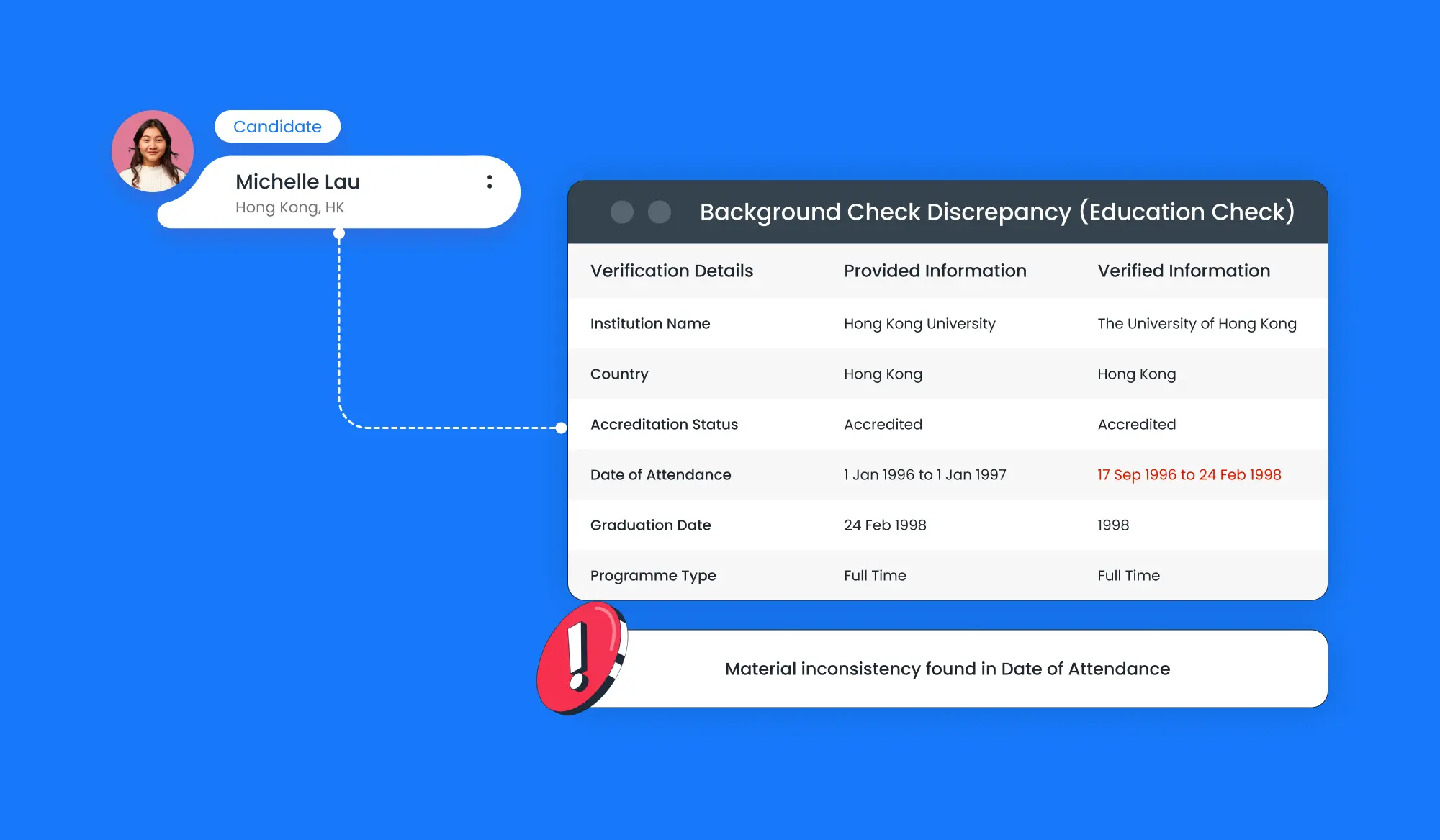
Education Verification
Education verification verifies academic qualifications by confirming records directly with educational institutions. This helps employers ensure that the candidate’s claimed qualifications are legitimate.
Discrepancies may include:
- Degree not found in institution records
- Differences in graduation dates
- Unaccredited institutions
What Should Be Done?
If discrepancies are found, employers should confirm the academic records directly with the educational institution. Candidates may be required to provide official transcripts, certificates, or additional proof of qualification.
Employment Verification
Employment verification confirms a candidate’s previous work history with past employers. This includes verifying employment dates, job titles, and sometimes performance information.
Discrepancies may include:
- Employer unable to verify employment
- Differences in employment dates
- Job title inconsistencies
What Should Be Done?
If discrepancies arise, employers should verify employment details directly with previous employers or official records. Candidates may need to provide employment letters, payslips, or other documentation to confirm their work history.
Financial Regulatory Check
Financial regulatory checks identify disciplinary actions or sanctions issued by financial regulatory authorities. These checks are particularly relevant for roles in banking, finance, and regulated sectors.
Discrepancies may include:
- Regulatory sanctions
- Disciplinary actions by financial authorities
What Should Be Done?
If regulatory actions or disciplinary records are identified, employers should verify the details with the relevant regulatory authority. Candidates may need to provide clarification or documentation regarding the regulatory issue.
Global Sanctions & PEP Check
This check verifies whether a candidate appears on international sanctions lists or is identified as a politically exposed person (PEP). It is often used in regulated industries to meet compliance requirements.
Discrepancies may include:
- Match against global sanctions lists
- Regulatory or political exposure records
What Should Be Done?
If a match appears in sanctions or politically exposed person (PEP) databases, employers should conduct enhanced due diligence to confirm the accuracy of the match. Candidates may be asked to provide identification details or supporting documentation to clarify the record.
ID Check
ID checks confirm whether a candidate’s personal details match official identification documents such as government-issued IDs. This check helps ensure that the individual being screened is correctly identified and that the provided information is authentic.
Discrepancies may include:
- Name mismatch between documents
- Incorrect date of birth or identification number
- Invalid or incomplete identification information
What Should Be Done?
If discrepancies appear, employers should verify the candidate’s identity details against official government-issued identification. Candidates may need to submit clear copies of valid identification documents to confirm their personal details.
Insurance Agent Check
Insurance agent checks confirm whether a candidate is registered or licensed to sell insurance products. Employers may verify this information through official regulatory databases.
Discrepancies may include:
- Unregistered insurance agent status
- Expired or invalid insurance license
What Should Be Done?
If discrepancies appear in insurance agent records, employers should verify the candidate’s registration status with the relevant regulatory body. Candidates may be required to provide proof of licensing or updated registration details.
Insurance Regulatory Check
Insurance Regulatory Check reviews records from insurance regulatory bodies to identify disciplinary actions or violations. It helps employers ensure compliance when hiring professionals in the insurance sector.
Discrepancies may include:
- Disciplinary actions by insurance regulators
- Violations of regulatory guidelines
What Should Be Done?
If disciplinary actions or regulatory violations are identified, employers should confirm the information through official regulatory databases. Candidates may be asked to explain the circumstances or provide documentation related to the record.
Passport Check
Passport checks validate the authenticity and details of a candidate’s passport. These checks help confirm identity and nationality, which may be required for international employment or immigration compliance.
Discrepancies may include:
- Passport information mismatch
- Expired or invalid passport
- Differences in personal identification details
What Should Be Done?
If discrepancies are detected, employers should confirm passport authenticity through official verification systems and request updated documentation if required. Candidates may need to provide a valid or renewed passport.
Professional License & Membership Check
This check verifies professional licenses, certifications, and memberships that may be required for specific roles. Employers ensure that these credentials are valid and issued by recognized authorities.
Discrepancies may include:
- Expired professional licenses
- Unverified professional memberships
What Should Be Done?
If discrepancies appear in professional licenses or memberships, employers should verify the credentials through the relevant licensing authority or professional organization. Candidates may be required to provide valid certificates or updated registration details to confirm their professional status.
Reference Check
Reference checks involve contacting previous supervisors or professional contacts to validate a candidate’s work performance and conduct. These checks help employers gain additional insights into the candidate’s professional background.
Discrepancies may include:
- Negative feedback from references
- Differences between candidate claims and reference statements
What Should Be Done?
If discrepancies arise during reference checks, employers should verify the feedback with multiple references when possible. Candidates may be asked to provide additional references or clarify any differences in information.
Right to Work Check
Right to work checks confirm whether a candidate is legally authorized to work in a specific country. Employers must ensure that the candidate has valid work authorization before employment begins.
Discrepancies may include:
- Expired work visa
- Missing work authorization documentation
- Invalid employment pass
What Should Be Done?
If discrepancies are identified, employers must verify the candidate’s work authorization through immigration records or official permits. Candidates may be required to provide valid visas, employment passes, or updated authorization documents.
Salary Verification Check
Salary verification checks confirm a candidate’s past compensation details when required. Employers may conduct this check to ensure salary expectations are aligned with verified records.
Discrepancies may include:
- Salary differences between reported and verified records
- Major variations in bonuses or benefits
What Should Be Done?
If differences in salary records are identified, employers should confirm the compensation details through official documents such as payslips, tax records, or employment letters. Candidates may be asked to provide supporting documentation to clarify the reported salary information.
Social Media Check
Social media checks review publicly available online activity to identify potential reputational concerns. Employers may evaluate whether online behaviour aligns with company values and professional expectations.
Discrepancies may include:
- Content that conflicts with company policies
- Public posts linked to misconduct or reputational concerns
What Should Be Done?
If social media content is identified, employers should review whether the information is publicly available and relevant to professional conduct. Candidates may be allowed to explain the context before any conclusions are made.
Reviewing & Handling Background Check Discrepancies
When a background check discrepancy appears during an employment background check, employees typically follow a structured review process to understand the issue and determine its impact on the hiring decision. Not every discrepancy automatically leads to rejection, as some differences may occur due to simple mistakes, outdated records, or documentation gaps.
To ensure fair and consistent evaluation, organisations usually review discrepancies through multiple verification and assessment steps.
Key steps include:
Verification Review: The background check provider first verifies the discrepancy by cross-checking the information with official records, databases, or source institutions. This step ensures that the reported mismatch is accurate and not caused by incomplete or outdated data.
Internal Review: Once the discrepancy is confirmed, the employer’s HR or compliance team reviews the findings. They assess the type of discrepancy, the role being applied for, and whether the issue is minor or potentially significant.
Candidate Clarification: In many cases, candidates are allowed to explain the discrepancy or submit additional supporting documents. This step allows employers to understand whether the difference occurred due to an honest mistake, outdated records, or other reasons
Risk Assessment: After reviewing the explanation and verification results, the employer evaluates whether the discrepancy poses a risk to the organisation. Factors such as job sensitivity, regulatory requirements, and company policies are considered before making a final hiring decision.
Organisations often follow standardized compliance procedures to ensure that discrepancies are reviewed in a fair, transparent, and consistent manner during the hiring process.
How Candidates Can Address or Clarify Background Check Discrepancies
If a discrepancy is identified during a background check, candidates usually have an opportunity to explain or clarify the issue. In many cases, discrepancies occur due to simple mistakes, outdated records, or differences in documentation rather than intentional misrepresentation. Responding promptly and providing accurate information can help resolve the issue and support a fair review process.
There are several ways candidates can address discrepancies:
Review the Report Carefully: Candidates should carefully review the background check report to understand where the discrepancy occurred. Identifying the exact difference between the provided information and verified records helps determine the appropriate explanation or correction.
Provide Supporting Documents: If the discrepancy is due to missing or outdated information, candidates may provide additional documents to clarify the situation. These may include employment letters, educational certificates, identity documents, or other official records.
Explain the Situation Clearly: Sometimes differences occur because of simplified CV details, name changes, or gaps in documentation. Providing a clear and honest explanation helps employers understand the reason behind the discrepancy.
Correct Inaccurate Information: If the discrepancy occurred due to an error in the application or documentation, candidates should correct the information and provide the accurate details. Prompt corrections help ensure the verification process can continue smoothly.
By communicating openly and providing accurate documentation, candidates can often resolve a background check discrepancy without negatively affecting the hiring process.
Best Practices to Prevent Background Check Discrepancies
Background check discrepancies can often be avoided when both candidates and employers follow accurate documentation and verification practices. Taking proactive steps before and during the hiring process helps reduce the chances of mismatched information appearing during verification.
By maintaining transparency and ensuring records are accurate, both parties can support a smoother and more reliable background check process.
For Candidates
Ensure Your Resume Details are Accurate: Review your CV carefully to ensure employment dates, job titles, company names, and educational qualifications are correct. Even small inconsistencies can create discrepancies during background verification.
Provide Complete and Correct Information: Share accurate details such as address history, duration of stay, and other information requested by the employer. Incomplete or incorrect information may delay the verification process.
Keep Supporting Documents Ready: Maintain copies of key documents such as employment letters, educational certificates, and identification documents so they can be provided quickly if requested during verification.
Be Transparent About Employment History: If there are employment gaps, contract roles, or short-term assignments, mention them clearly in your CV to avoid confusion during background checks.
For Employers
Use Structured Verification Processes: Employers should follow standardized background verification procedures to ensure that candidate information is reviewed consistently. A structured process helps reduce errors and improve the reliability of verification results.
Work with Reliable Background Screening Providers: Partnering with experienced background screening providers can improve the accuracy and efficiency of verification checks. Professional providers often have access to reliable data sources and verification systems.
Follow Consistent Compliance Procedures: Organisations should ensure that background checks follow established compliance and data protection guidelines. Consistent procedures help maintain fairness and transparency in the hiring process.
Allow Candidates an Opportunity to Clarify Discrepancies: Providing candidates with the chance to explain discrepancies promotes a fair review process. In many cases, differences may occur due to documentation errors or outdated records that can be clarified with additional information.
Where regulatory compliance and due diligence are important in hiring practices, following these best practices helps organisations maintain reliable and responsible hiring standards.
Conclusion
Background check discrepancies often occur due to small errors, outdated information, or missing documentation rather than intentional misrepresentation. However, even minor background check mismatches can raise concerns for employers and delay the hiring process.
For employers, implementing a structured background verification process helps ensure informed hiring decisions and reduces organizational risk. For candidates, providing accurate information and maintaining proper documentation can help prevent common background check discrepancies and make the verification process smoother.
Understanding the most common discrepancies in background checks can help both employers and candidates manage the process more effectively. A well-managed background screening process not only protects organizations but also builds trust between employers and candidates from the beginning of the employment relationship.
Want to Avoid Hiring Risks?
Let CheckMinistry handle your background verification with accuracy and speed.