 Sancharini Panda

” Education is the most powerful weapon which you can use to change the world.” — Nelson Mandela
Introduction
Background screening in the education industry plays a critical role in protecting students, maintaining institutional trust, and ensuring safe hiring practices. Educational institutions must verify teachers, administrators, volunteers, and support staff before employment to reduce risks such as misconduct, fake qualifications, and compliance violations. A strong school staff background screening process helps create safer learning environments while safeguarding institutional reputation.
This statement underscores the immense responsibility and respect that the education industry carries, making background screening in the education industry more important than ever. Historically, education has been a cornerstone of progress, shaping the future of generations. However, recent incidents of misconduct, child abuse, and negligence within educational institutions have tarnished this legacy. In order to restore trust and uphold integrity, School Staff Background Screening must become standard practice. By thoroughly screening potential hires, educational institutions can reclaim the pride and respect this industry rightfully deserves through effective background screening in the education industry.
Education Industry Faces Growing Threat of Employee Fraud
A 40-Year-Old Shuttle Bus Driver Has Been Arrested For Kidnapping And Sexually Assaulting A Child. Source: ASEAN NOW | 28 May 2024
Police Investigating After 5-Year-Old Girl Allegedly Kicked By Pre-school Teacher. Source: Channel News Asia | 6 June 2024
Ex-student Care Officer Admits Ill-treating 5-Year-Old Boy At Kindergarten. Source: Strait Times | 2 July 2024
A string of disturbing headlines like these should serve as a wake-up call, highlighting the urgent need for background screening in the education industry. These are not isolated incidents but rather symptomatic of a larger problem. It highlights the grim reality that without strict vigilance in the hiring process, unsuitable candidates can easily infiltrate educational institutions. This not only puts the safety and well-being of students at grave risk but also jeopardizes the institution’s reputation. Therefore, employers must be careful and implement rigorous background screening for employment in the education industry to ensure that those entrusted with the care and education of children are worthy of their positions.
What Makes the Education Industry Different?
With great power comes great responsibility, and nowhere is this truer than in the education industry. Unlike other industries, the education sector wields the immense power to shape young minds, nurture their potential, and guide them toward a promising future. This is where background screening in the education industry plays a critical role in ensuring only suitable candidates are hired.
However, this power comes with the crucial responsibility of ensuring that those entrusted with these roles are thoroughly vetted, not just for qualifications but for their ability to influence young minds positively. Therefore, employers in the education sector must assess two key aspects when conducting background checks for employment:
- Is the candidate capable and qualified to perform their job effectively?
- Does the candidate pose any risk to the students, staff, or the institution’s reputation?
By addressing both questions, background screening helps mitigate risks and uphold the integrity of the uniquely sensitive and high-impact education industry.
Who Should be Screened? A Complete School Staff Background Screening Approach
A safe and secure learning environment requires a comprehensive approach to background screening in the education industry. Every individual who interacts with students, from teachers and administrators to volunteers and maintenance staff, should undergo thorough checks. This is why institutions across the education industry must implement school staff background screening for all roles, including:
- Teachers
- Administrators
- Volunteers
- Sports coaches
- Bus drivers
- Maintenance staff
By implementing rigorous school staff background screening for all these roles, educational institutions can better safeguard their students and uphold their commitment to a safe environment for everyone.
Common Background Checks Conducted for Employment in the Education Industry
The types of checks conducted in the education industry can vary based on factors such as job responsibilities, regulatory guidelines, and the sensitivity of the work. Each type of check plays a crucial role in ensuring that individuals in educational settings go through thorough screening and are suitable for their roles. These checks are a crucial part of background screening in the education industry, ensuring candidate reliability. Here’s an overview of common types of checks performed during background screening for employment in the education sector:
| Type of Check | Details |
|---|---|
| Education Background Check | Verifies the candidate’s academic qualifications and degrees to ensure they meet the job requirements. |
| Employment History Check | Reviews the candidate’s previous employment to confirm past roles, responsibilities, and performance, ensuring consistency and reliability. |
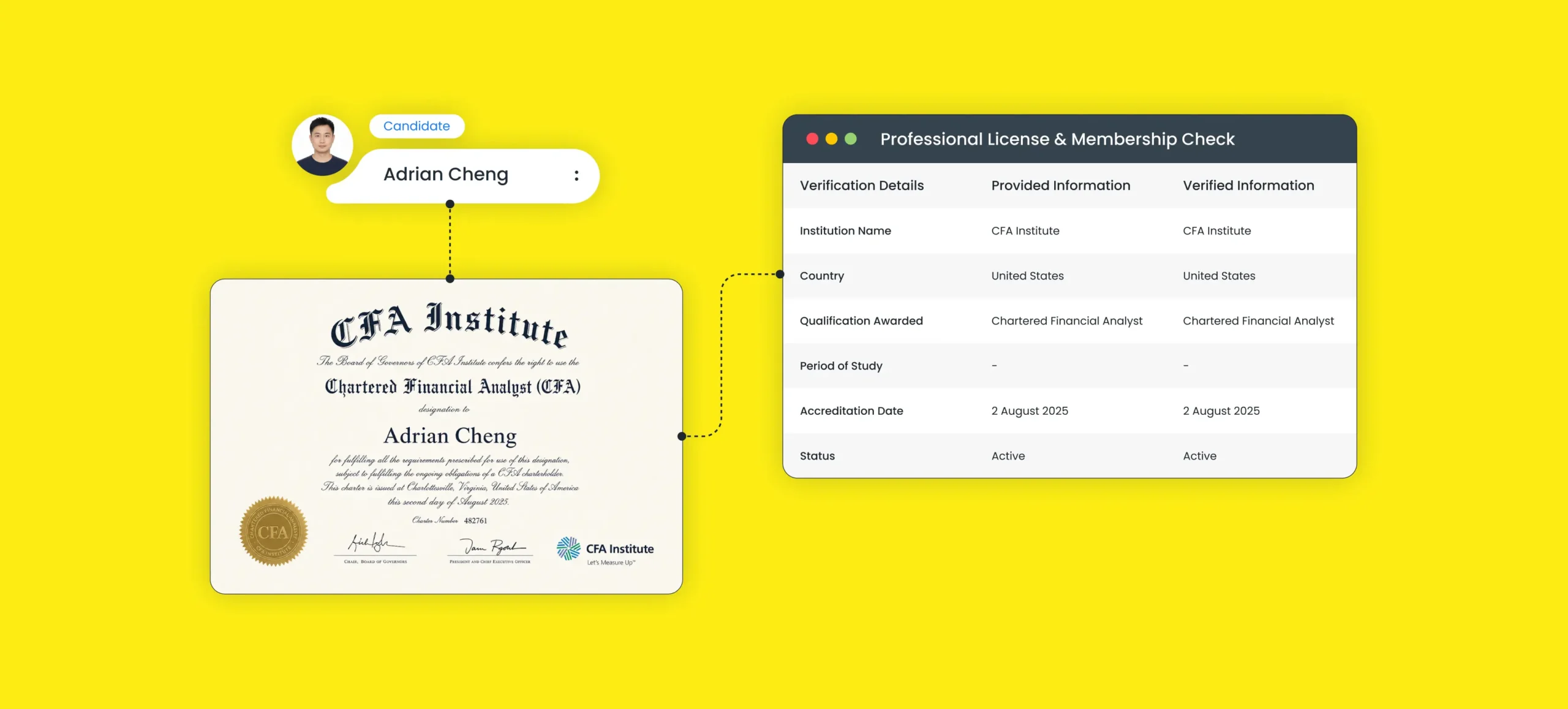
| Professional License Check | Confirms the validity of any professional licenses or certifications required for specific roles, such as teaching licenses or certifications in specialized areas. |
| Criminal Record Check | Examines the candidate’s past criminal convictions and charges to identify any potential risk to students or staff in an educational setup. |
| Sexual Offender Registry Check | Searches national and state sexual offender registries to ensure the candidate is not listed as a sexual offender, protecting students from potential harm. |
Additional Background Checks (Conducted for Specific Job Roles)
In addition to the common background checks, certain roles within educational institutions may require additional screenings to address specific responsibilities and risks. These targeted checks help ensure that individuals in specialized positions meet the necessary criteria for their roles. Here are some examples of additional checks for specific job roles:
| Type of Check | Details |
|---|---|
| Credit Check | Conducted for administrators in key financial roles to assess their financial stability and responsibility, preventing mismanagement or financial misconduct. |
| Drug Tests | Administered in certain circumstances or countries to ensure that employees are not under the influence of substances that could impair their job performance. |
| Driver's Licence Check | Required for appointing drivers to verify that they hold a valid driver's licence & can be entrusted with the safe transportation of students. |
These additional checks address the unique requirements and responsibilities associated with specific job roles in the education sector. By implementing these targeted screenings, educational institutions can further enhance the safety and effectiveness of their workforce, ensuring that all employees meet the highest standards of integrity and competence.
Legal Considerations for Conducting Background Screening for Employment in the Education Industry
When implementing background screening in the education industry, it is crucial to navigate the legal landscape carefully. Adhering to legal requirements not only ensures compliance but also protects the interests of both the institution and the individuals involved. Careful consideration of the legalities involved not only helps avoid potential legal disputes but also maintains the integrity of the screening process. Here are some key legal considerations:
Obtain Written Consent from Candidates: The first and foremost step to ensure legal compliance in background screening for employment is to inform the candidates about the screening and obtain explicit consent from them. This ensures that the screening process is fair and transparent to both the candidates and employers.
Ensure compliance with data privacy guidelines: Employers must handle background check information with strict confidentiality. They must also ensure that the data collection is solely for a legitimate purpose. This includes secure storage and disposal of sensitive data. There are country-specific laws that govern the data collection and storage guidelines. For instance, in the European Union, the General Data Protection Regulations (GDPR) govern the processing of personal data.
Adhere to Laws on Accessing Criminal Records: Different jurisdictions have varying laws regarding access to criminal records in employment decisions. Employers conducting background screening for employment in educational institutions must be aware of these regulations. For instance, in Hong Kong, employers cannot directly request a Certificate of No Criminal Conviction (CNCC). Instead, they can ask candidates to get one from the Hong Kong police.
Comply with Regulations for Working with Minors: Many countries have specific laws regarding individuals who work with children, including mandatory background checks. Employers must ensure compliance with such regulations to protect minors from potential harm. (e.g., in Hong Kong, the Sexual Conviction Record Check (SCRC) scheme outlines the guidelines for disclosure of information about sexual offenders to specific persons such as school principals.)
By addressing these legal considerations, employers hiring in the education industry can conduct background screenings that are both effective and compliant. It also ensures the fostering of a safe and trustworthy environment for all stakeholders and upholds the highest standards of integrity in the hiring process.
Key Takeaways
- Background screening in the education industry is essential for ensuring student safety and maintaining institutional trust.
- Recent incidents of misconduct relating to this industry underscore the need for thorough employee vetting to bring back the glory and respect the education industry deserves.
- Comprehensive screening is essential for everybody involved in educational institutions, including teachers, administrators, volunteers, and maintenance staff, to ensure a secure environment.
- The common types of checks involved in this industry include educational background, employment history, professional license, criminal checks, etc. However, additional checks like credit checks, driver’s license checks, drug testing, etc, may be required in certain cases and roles.
- To ensure compliance with regulatory guidelines and protect an organization’s reputation, employers must carefully review the legal considerations of conducting background screening for employment. This includes: obtaining written consent, ensuring compliance with laws relating to data privacy, access to criminal records, and so on.
- Investing in background screening in the education industry is not just a requirement, but a strategic commitment to safety, integrity, and long-term success.
Is Your Education Workforce Fully Screened?
Reduce risk and protect students with education-industry background screening.