 Marketing Team

Introduction
Recruitment today involves more than reviewing resumes and conducting interviews. Organizations must also consider workplace safety, regulatory compliance, and potential financial or reputational risks when evaluating candidates. This makes background screening an essential part of modern hiring practices.
However, the wide range of verification checks, compliance procedures, and screening terminology can often feel confusing for HR professionals and employers. Understanding these commonly used terms helps businesses make informed decisions and maintain a more effective screening process.
This comprehensive guide on background check terms explained provides a simple A-Z glossary of essential background screening concepts used across industries. Whether you are new to employee screening or looking to strengthen your hiring practices, this background check glossary will help you better understand the key terms involved in modern verification and screening processes.
A–Z Background Check Terms Explained
Background check processes include a wide range of verification methods used to confirm a candidate’s identity, qualifications, employment history, and overall credibility. Different industries and job roles may require different types of checks based on compliance requirements and risk levels.
The following background check terms explain commonly used screening and verification terms in simple language to help HR professionals better understand their purpose in the hiring process.
A
Address Check: An address check verifies a candidate’s current and previous residential addresses using official records, utility bills, government-issued documents, or database searches. This check helps employers confirm identity consistency, validate residency history, and identify discrepancies in the information provided by the candidate. Address verification is commonly used as part of identity screening and fraud prevention processes.
Adverse Media Check: An adverse media check involves reviewing publicly available news articles, media coverage, online publications, and other public sources to identify potential reputational, legal, or ethical concerns associated with an individual or organisation. This screening helps employers detect issues such as fraud allegations, financial misconduct, criminal activity, regulatory violations, or negative publicity that may pose a risk to the business.
Anti-Money Laundering (AML) Check: An Anti-Money Laundering (AML) Check helps organizations identify individuals linked to money laundering, terrorist financing, financial fraud, or other suspicious financial activities. The screening process typically includes reviewing sanctions databases, watchlists, politically exposed person (PEP) records, and regulatory sources. AML checks are widely used in banking, financial services, insurance, and other regulated industries to support compliance and reduce financial crime risks.
B
Bankruptcy Check: A bankruptcy check reviews whether a candidate has previously filed for bankruptcy or has a history of significant financial insolvency. This check helps employers assess potential financial risks, especially for roles involving financial management, accounting, budgeting, or access to sensitive financial information. Organizations in banking, finance, and regulated industries may use bankruptcy checks to evaluate financial responsibility, compliance requirements, and overall risk exposure.
C
Civil Litigation Check: A civil litigation check identifies whether an individual has been involved in non-criminal legal disputes, including contract disputes, employment-related cases, property disagreements, debt recovery actions, or other civil court proceedings. This check helps employers understand a candidate’s legal history and assess potential risks related to professional conduct, financial reliability, or dispute patterns that may impact workplace suitability.
Continuous Monitoring: Continuous monitoring refers to an ongoing background screening process conducted after hiring to track any new risks or changes in an employee’s profile. This may include updates on criminal records, sanctions lists, regulatory actions, or adverse media coverage. It helps organizations maintain compliance, respond quickly to emerging risks, and ensure that employees continue to meet internal and industry standards throughout their employment.
Credit Check: A credit check evaluates an employee’s financial history, including credit score, outstanding debts, repayment behavior, loan activity, and overall financial stability. It is commonly used for roles involving financial responsibility, access to company funds, or senior-level decision-making. Employers use credit checks to assess financial reliability and reduce the risk of fraud or mismanagement.
Criminal Record Check: A criminal check verifies whether a candidate has any past or pending criminal convictions recorded in official law enforcement databases. This may include arrests, court judgments, or ongoing legal cases, depending on jurisdiction and legal restrictions. It helps employers ensure workplace safety, regulatory compliance, and suitability for sensitive or high-trust roles.
CV Check: A CV check confirms the accuracy of information provided in a candidate’s resume or curriculum vitae, including educational qualifications, job titles, employment dates, certifications, and key responsibilities. This verification helps employers detect misrepresentation or exaggeration and ensures that hiring decisions are based on accurate and validated professional information.
D
Declaration of Integrity: A declaration of integrity is a formal statement signed by candidates confirming that all information provided during the hiring process is true, complete, and not misleading. It serves as a legal and ethical commitment, helping employers reduce the risk of falsified information and reinforce accountability in the recruitment process.
Directorship Check: A directorship check identifies whether an individual currently holds or has previously held positions as a company director, board member, or corporate officer. This helps employers assess business affiliations, potential conflicts of interest, and professional background in corporate governance.
Driver’s Licence Check: A driver’s licence check verifies the authenticity, validity, and status of a candidate’s driving licence. It may also confirm licence class, endorsements, and expiry status. This check is especially important for roles involving driving responsibilities, transportation, logistics, or field operations.
E
Education Check: An education check confirms a candidate’s academic qualifications by verifying degrees, diplomas, certifications, and enrollment history with educational institutions. It ensures that educational claims are accurate and helps employers avoid fraudulent qualifications.
Employment Check: employment check confirms a candidate’s previous job details, including job titles, employment duration, responsibilities, and sometimes performance or reason for leaving. It helps employers validate work experience and ensure consistency in career history.
F
Financial Regulatory Check: A financial regulatory check reviews whether an individual has been subject to regulatory action, penalties, restrictions, or investigations by financial authorities. This is especially important for roles in banking, investment, insurance, and other regulated financial sectors.
G
Global Sanctions and PEP Check: A Global Sanctions and PEP Check screens individuals against international sanctions lists and Politically Exposed Person (PEP) databases. It helps identify individuals who may pose compliance, legal, or reputational risks due to political exposure or restricted status.
Gap Analysis: Gap analysis reviews unexplained gaps in a candidate’s employment or education history. It helps employers assess whether gaps are legitimate (such as study, caregiving, or sabbaticals) or require further clarification. This process helps organizations identify potential inconsistencies or undisclosed activities that may impact hiring decisions. Conducting gap analysis also supports transparency in the recruitment process and helps employers build a more reliable and trustworthy workforce.
H
High-Risk Screening: High-risk screening involves enhanced background checks for roles that carry higher levels of responsibility, access to sensitive data, or regulatory exposure. It typically includes deeper verification and additional risk assessments.
Healthcare Sanctions (OIG/SAM): Healthcare sanctions screening checks whether an individual appears on exclusion lists such as the U.S. Office of Inspector General (OIG) or System for Award Management (SAM). It ensures that healthcare professionals meet compliance standards and are eligible to work in healthcare-related roles.
I
ID Check: An identity check verifies government-issued identity documents such as passports, national IDs, or driving licences to confirm that the individual is who they claim to be. It is a foundational step in most background screening processes. This check also helps prevent identity fraud and ensures consistency across all submitted personal records.
Insurance Agent Check: An Insurance Agent Check verifies licensing, regulatory standing, and disciplinary records of insurance professionals. It ensures that agents are authorized to operate and comply with industry regulations. It also confirms that the licence is active and issued by the relevant regulatory authority. This helps employers reduce risk by ensuring only qualified and compliant individuals handle insurance-related responsibilities.
Insurance Regulatory Check: An Insurance Regulatory Check reviews records maintained by insurance regulatory bodies to identify violations, suspensions, or compliance issues. It helps ensure candidates meet professional and legal standards in the insurance sector. This screening is important for roles that involve client advisory, policy underwriting, or financial decision-making within insurance organizations. It also helps employers detect any past disciplinary actions, fines, or restrictions imposed by regulatory authorities, ensuring better compliance and reduced operational risk.
Interpol Red Notices: Interpol red notices are international alerts issued to locate and provisionally arrest individuals wanted for serious crimes. Screening against these notices helps organizations identify high-level global security risks. They are used to flag individuals who are wanted for prosecution or to serve a sentence in member countries. For employers, this check helps ensure compliance with international security standards and reduces exposure to serious criminal risk.
J
Judicial Records: Judicial Records refer to official court records related to an individual’s legal history, including civil cases, criminal proceedings, judgments, and court orders. These records help organizations identify potential legal or compliance-related risks during the hiring process. Reviewing judicial records helps employers verify whether a candidate has been involved in serious legal disputes or court actions. This check supports informed hiring decisions, especially for roles involving trust, compliance, or financial responsibility.
K
Know Your Customer (KYC) Verification: KYC verification is a regulatory process that confirms a customer’s identity and assesses potential risks, such as fraud or money laundering. It typically involves document verification, identity checks, and risk profiling. It also includes screening against sanctions lists and politically exposed person (PEP) databases where required. This process helps organizations comply with legal regulations and prevent financial crime.
Key Management Personnel (KMP) Verification: KMP verification assesses the background, qualifications, and compliance history of senior executives and decision-makers within an organization. It helps ensure leadership integrity and governance standards. It also helps identify any past regulatory issues, legal concerns, or conflicts of interest involving senior leadership. This ensures that individuals in key roles meet both ethical and compliance expectations.
L
Labour Tribunal Records: Labour Tribunal Records refer to official records of employment-related disputes handled by labour or employment tribunals. These may include cases involving wrongful termination, unpaid wages, workplace discrimination, or contractual disagreements between employers and employees. Reviewing these records helps organizations identify past employment disputes that may be relevant to a candidate’s professional background. This check supports risk assessment and helps employers make more informed hiring decisions for sensitive or managerial roles.
M
Misconduct Check: A misconduct check investigates records of unethical behavior, workplace violations, harassment claims, or disciplinary actions. It helps employers assess behavioral risks that may impact workplace culture. It also reviews past employer records or internal investigations where available. This helps organizations make safer hiring decisions by identifying candidates with repeated or serious workplace conduct issues.
Military Service Verification: Military service verification confirms an individual’s military background, including service duration, rank, role, and discharge status. It may also validate training or specialized skills gained during service. It helps employers verify claims related to defense or armed forces experience. This check is often used to confirm discipline, skills, and eligibility for roles that require a security clearance or structured operational experience.
N
National ID Check: A National ID Check verifies the authenticity and validity of a candidate’s government-issued national identification document. It helps confirm personal details such as name, date of birth, nationality, and identification number. This check is commonly used to establish identity accuracy during the background verification process. It also helps organizations prevent identity fraud and ensure compliance with hiring and regulatory requirements.
O
Online Presence Check: An online presence check reviews publicly available digital activity, including social media profiles, blogs, forums, and online mentions. It helps identify reputational risks, behavioral concerns, or inconsistencies in professional conduct. It also helps verify whether the candidate’s public behavior aligns with the organization’s ethical and cultural standards. This check is used to identify any content that may pose reputational or workplace risk.
OFAC (Office of Foreign Assets Control) Search: An OFAC search screens individuals against sanctions lists maintained by the U.S. Treasury Department. It helps organizations ensure compliance with international financial and trade regulations. It identifies individuals or entities restricted from doing business due to legal, security, or national policy reasons. This screening is widely used in Hong Kong by multinational companies and financial institutions to meet global compliance standards and reduce exposure to sanctioned parties.
P
Passport Check: A passport check verifies the authenticity, validity, and details of a passport, including identity information and expiry status. It is commonly used for identity verification and international hiring. It also helps confirm that the document has not been tampered with or fraudulently issued. This ensures accurate identity validation, especially for cross-border employment and compliance requirements.
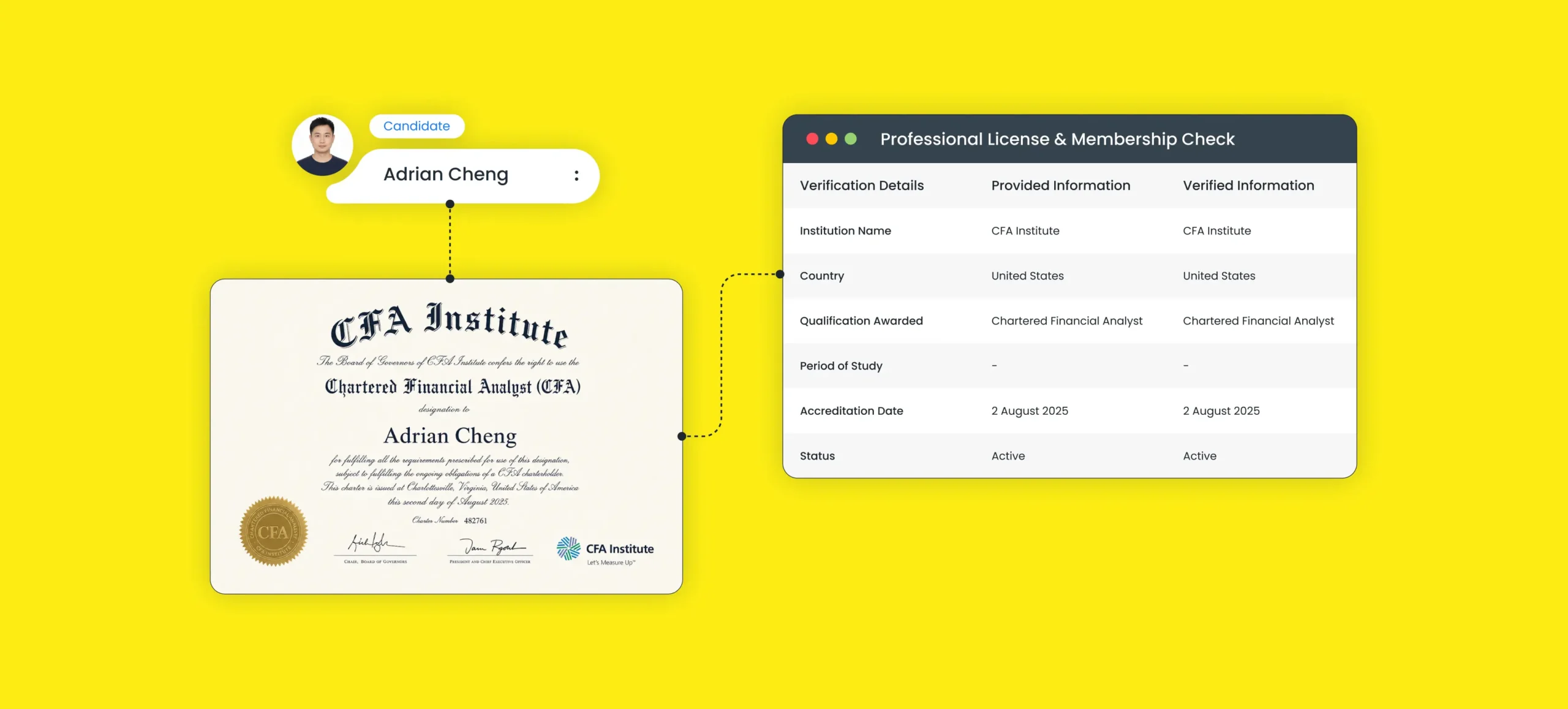
Professional License and Membership Check: This check confirms whether a candidate holds valid professional licences or memberships required for regulated occupations, such as law, medicine, accounting, or engineering. It also verifies whether the licence is active and issued by the relevant governing body. This helps employers ensure that candidates meet mandatory professional standards and are legally qualified for their roles.
Police Verification: Police verification checks official law enforcement records to determine whether an individual has any criminal history or pending cases. It is widely used for employment and tenancy screening. It helps validate the candidate’s background through government or local authority databases. This check is commonly required for roles involving security, finance, or access to sensitive information.
Politically Exposed Person (PEP): A politically exposed person is someone who holds or has held a prominent public position, such as a government official or senior politician. These individuals are considered higher risk for corruption or bribery exposure. PEP screening helps organizations identify individuals who may require enhanced due diligence. It is widely used in financial services and compliance-driven industries to manage regulatory and reputational risk.
Physical Verification: Physical verification involves physically confirming the existence of an address, workplace, or business to ensure authenticity and prevent fraud. It helps validate whether the provided location details are real and operational. This check is often used for high-risk roles, vendor verification, and cases where document-based checks are not sufficient.
Q
Qualification Verification: Qualification Verification confirms the authenticity of a candidate’s academic qualifications, certifications, diplomas, and professional credentials. It helps employers ensure that the individual possesses the education and qualifications claimed during the hiring process. This check is commonly conducted through educational institutions, certification bodies, or authorized databases. It helps reduce the risk of fraudulent qualifications and supports accurate hiring decisions.
R
Reference Check: A reference check involves contacting previous employers, supervisors, or professional contacts to validate a candidate’s performance, behavior, and work ethic. It also helps verify job responsibilities, achievements, and overall reliability in previous roles. This check provides employers with additional insights into a candidate’s suitability beyond what is listed on the resume.
Right to Work Check: A right to work check confirms whether a candidate is legally permitted to work in a specific country. It ensures compliance with immigration and labor laws. It typically involves verifying work permits, visas, or residency documents issued by government authorities. This helps employers avoid legal penalties and ensures all hires meet local employment regulations.
S
Salary Verification: A salary verification confirms a candidate’s previous compensation details, including salary structure, bonuses, and benefits. It helps validate employment claims and compensation history. It is typically conducted through previous employers or authorized HR departments. This check helps ensure transparency in hiring and supports fair compensation decisions.
Social Media Screening: A social media screening reviews publicly available social media content to assess behavior, professionalism, and potential reputational risks. It helps identify content that may conflict with company values or workplace policies. This screening supports better cultural fit assessment and reputational risk management.
Sanctions Screening: sanctions screening checks whether an individual appears on government or international sanctions lists, ensuring compliance with legal and financial regulations. It helps organizations avoid dealing with restricted individuals, entities, or countries. This is a key compliance requirement in regulated industries such as banking, finance, and global trade.
Sex Offender Registry Check: A sex offender registry check verifies whether an individual is listed on official sex offender databases maintained by government authorities. It helps employers assess potential safety risks, especially in roles involving vulnerable populations. This screening is commonly used in education, childcare, healthcare, and security-sensitive positions.
Shareholder Search: A shareholder search identifies a candidate’s ownership stakes, business interests, or affiliations with companies, helping detect conflicts of interest. It also helps organizations understand external financial relationships that may impact decision-making. This check supports transparency and governance in senior or compliance-focused roles.
Substance Abuse Testing: substance abuse testing screens candidates for illegal drugs or controlled substances to ensure workplace safety and compliance with company policies. It also helps organizations understand external financial relationships that may impact decision-making. This check supports transparency and governance in senior or compliance-focused roles.
T
Tenant History Check: A tenant history check reviews rental behavior, including payment history, evictions, disputes, and lease compliance. It is commonly used for rental screening. It helps landlords and property managers assess whether a candidate is financially reliable and responsible as a tenant. This check reduces the risk of rental defaults and property-related disputes.
Turnaround Time (TAT): Turnaround time refers to the duration required to complete all background checks and deliver the final verified report to the employer. It helps landlords and property managers assess whether a candidate is financially reliable and responsible as a tenant. This check reduces the risk of rental defaults and property-related disputes.
U
Universal Background Screening: Universal background screening refers to a comprehensive screening approach that combines multiple verification checks into a single, structured process. It typically includes identity verification, employment checks, criminal record searches, education verification, and compliance-related screenings, depending on job requirements. This approach helps organizations standardize hiring processes, improve efficiency, and ensure consistent risk assessment across all candidates.
V
Verification Report: A verification report is the final compiled document that summarizes the results of all completed background checks in a structured format for employer review. It typically includes the status of each check, such as verified, mismatched, or pending, along with supporting details. This report helps HR teams make informed hiring decisions based on a clear and consolidated screening outcome.
Visa Status Verification: Visa status verification confirms a candidate’s immigration status, visa validity, and legal authorization to work in a specific country. It also checks visa type, expiry date, and any work restrictions associated with the visa. This ensures compliance with immigration laws and helps employers avoid hiring individuals without proper work authorization.
W
Watchlist Screening: Watchlist screening checks individuals against global databases, including sanctions lists, law enforcement alerts, and compliance watchlists. It helps organizations identify individuals who may pose legal, financial, or security risks before hiring or onboarding. This screening is commonly used in regulated industries to ensure compliance with international laws and prevent involvement with flagged entities.
Worker’s Compensation Search: A worker’s compensation search reviews claims related to workplace injuries, where legally accessible, to identify potential risk patterns. It helps employers understand past injury claims that may indicate safety risks or job suitability concerns. This check is often used for roles requiring physical work or high workplace safety standards.
X
Cross‑Border (X‑Border) Screening: Cross-Border (X-Border) Screening involves conducting background verification checks across multiple countries where a candidate has lived, studied, or worked. It helps organizations verify international employment history, education records, criminal checks, and compliance-related information. This screening is important for multinational hiring and global workforce mobility. It helps employers identify international risks and maintain consistent verification standards across different jurisdictions.
Y
Youth Offender Records: Youth Offender Records refer to legal records related to offenses committed by individuals while they were below the legal adult age. Access to these records is often restricted or regulated depending on local laws and jurisdiction. Organizations may review such records only where legally permitted and relevant to the role. This helps employers balance workplace safety requirements with legal compliance and rehabilitation considerations.
Z
Zero-Inquiry History: Zero-inquiry history refers to a credit profile with no previous credit inquiries or loan activity, often indicating limited or no credit history. It may suggest that the individual has not previously used formal credit products such as loans, credit cards, or financing services. This can make it more challenging for employers or financial institutions to assess creditworthiness due to the absence of historical financial data.
Conclusion
Understanding background check terms explained helps HR professionals make more informed hiring decisions while ensuring compliance and reducing organizational risk. From identity verification and employment checks to sanctions screening and continuous monitoring, every screening component plays an important role in building a reliable hiring process.
Using a structured and well-informed approach supported by a clear background check glossary helps organizations improve hiring accuracy, protect company reputation, and maintain workplace safety across industries.
Turn Screening Into a Competitive Advantage
Make informed hiring decisions with fast, accurate, and compliant background checks.